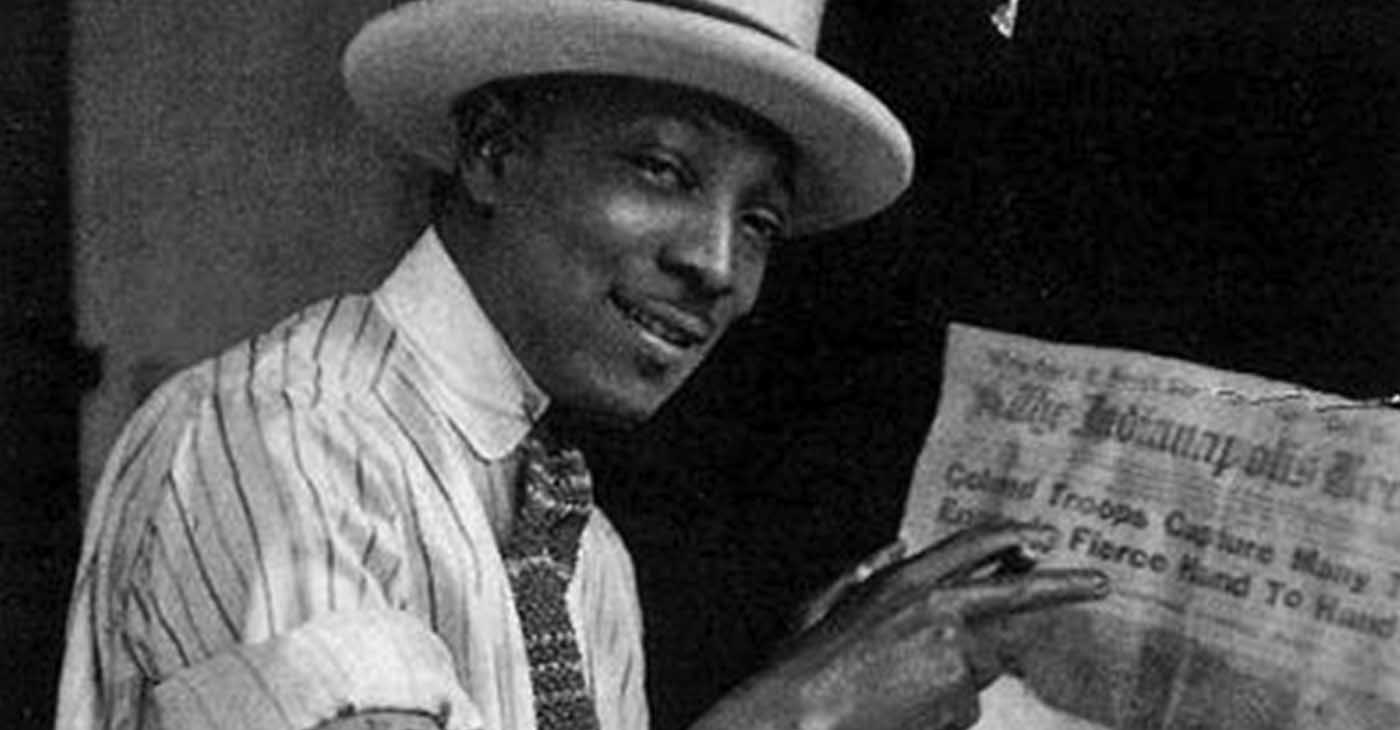
This photographer captured the middle class people of Harlem with his pictures.
by Rich Watson
James Van Der Zee was a portrait photographer in Harlem during a time in America when blacks migrated north, to Washington, DC and Philadelphia, and west, to Detroit and Chicago, to escape the racism of the south and gain a better standard of living. New York, and Harlem, was the major destination for many.
Van Der Zee was there to capture them on film.
Photography
In the nineteenth century, photography began with the daguerreotype. Frenchman Louis Daguerre perfected the process of creating a positive image on a silver surface and made it widely available in 1839. That same year, Philadelphia chemist Robert Cornelius took the first-ever “selfie.” In two years, he developed it as a daguerreotype.
Later, the development of the dry plate meant
- more time for photographers to set up a pose,
- less expensive equipment and
- the possibility of outdoor shots.
By the 1920s, the technology improved to the point where photographs could be made on glossy and semi-glossy paper.
James Van Der Zee in his studio
Van Der Zee, a Massachusetts native, bought his first camera as a teenager and took pictures of his family. In 1915 he worked as a darkroom assistant in a Newark, New Jersey portrait studio, and later as a portraitist. A year later, he opened the Guarantee Photo Studio on 125 Street in Harlem with the woman who would become his second wife, Gaynella Greenlee.
By 1910, 90 percent of African-Americans lived in the south. They moved north, in what history refers to as the Great Migration, due to not just racist conditions in the south, but for better economic opportunities. Central Harlem was ten percent black in 1910; twenty years later, that number increased to seventy percent.
The subjects in Van Der Zee’s photos were the beneficiaries of the new affluence in black life as a result of their northern migration. In his studio, he photographed brides, newlyweds, families, social clubs, notable black figures, and more.
The subjects are dressed elegantly, sometimes with props, sometimes not. Soldiers in uniform, little girls dancing, musicians, glamour queens, even corpses—they all caught Van Der Zee’s eye.
World War Two led to a decline in his work, matching the downturn in Harlem.
Harlem on their minds
In 1969, during the height of the Civil Rights movement and a year after Martin Luther King’s assassination, Van Der Zee was part of the Metropolitan Museum of Art’s exhibition “Harlem on My Mind: The Cultural Capital of Black America, 1900-1968.” The exhibit, however, had no paintings, drawings or sculptures by any Harlem-based artists. There were protests.
Since then, according to the Met’s website, “there has been a greater commitment at the Museum to more intentionally acquire work by Black artists in multiple collecting areas, largely due to the interests of successive generations of curators.”
In 2021, the Met, in collaboration with Van Der Zee’s third wife and widow Donna, established an archive of his work, to preserve and display.
Van Der Zee was rediscovered in the seventies. A collection of his funeral photographs, The Harlem Book of the Dead, came out in 1978, with a foreword by Toni Morrison.
After his death in 1983, he made the International Photography Hall of Fame.
———
Do you remember when James Van Der Zee was rediscovered? Leave a comment and let me know!
Share if you liked this post
⬇️

No comments:
Post a Comment